
Before the advent of modern financial systems, exchange rates were largely determined by the availability of currencies in different regions – a merchant in one country might exchange goods for coins from another, leading to a simple form of exchange rate (a rate at which one currency can be exchanged for another) based on the coins’ metal value. However, as economies grew and global trade expanded, so did the complexity of exchange rates. Today, exchange rates are influenced by a myriad of factors including economic indicators (statistics that reflect the health of an economy), market sentiment (the overall attitude of investors towards a particular market), and geopolitical events (events that can impact political stability and economies). Despite this complexity, many myths have arisen around how exchange rates are set and what factors can influence them. Understanding these rates is crucial for businesses, investors, and travelers alike. The impact of exchange rates on international trade and investment decisions cannot be overstated, as small fluctuations can result in significant gains or losses. The complexity and volatility of exchange rates make them a challenging but essential aspect of global economics.
For instance, consider a company that imports goods from abroad. If the exchange rate between the company’s home currency and the supplier’s currency changes, the cost of those goods can increase or decrease, affecting the company’s profitability. Similarly, investors looking to buy foreign stocks or bonds must consider the exchange rate between their home currency and the currency of the investment, as changes in the exchange rate can impact the investment’s value. Travelers, too, must contend with exchange rates when converting their money to a foreign currency, as unfavorable rates can increase the cost of their trip. These examples illustrate the importance of understanding exchange rates and the factors that influence them. Over time, various misconceptions about exchange rates have developed, including the belief that exchange rates are solely controlled by governments or that they are unaffected by market forces. However, the reality is that exchange rates are determined by a complex interplay of factors. To fully grasp this concept, it is essential to examine the factors that influence exchange rates and to debunk common myths surrounding their determination.
📝 In This Post
Breaking Down Exchange Rates
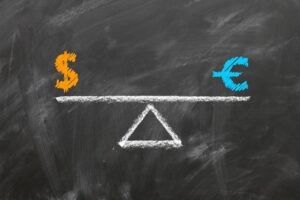
Exchange rates are essentially the price of one currency in terms of another – for example, how many euros one US dollar can buy. This price is determined in foreign exchange markets (global markets where currencies are traded), which are open to a wide range of participants, including banks, investment firms, and individual traders. The exchange rate is influenced by supply and demand (the amount of currency available for trading and the desire to buy or sell it), which in turn is affected by various economic factors, such as inflation rates (the rate at which prices for goods and services are rising), interest rates (the cost of borrowing money), and trade balances (the difference between a country’s exports and imports). To illustrate this concept, consider a country with high inflation. In such a scenario, the value of its currency may decrease, as high inflation erodes the purchasing power of the currency. This decrease in value can lead to a higher exchange rate, making imports more expensive and potentially affecting the country’s trade balance.
A key concept in understanding exchange rates is the difference between fixed exchange rates (rates that are set and controlled by the government) and floating exchange rates (rates that are determined by market forces). Most major economies use floating exchange rates, allowing market forces to determine the value of their currencies. However, some countries opt for fixed exchange rates, pegging their currency to a stronger currency, such as the US dollar, to stabilize their economy. The choice between fixed and floating exchange rates has significant implications for a country’s monetary policy and economic stability. For example, a fixed exchange rate can provide stability but limits a country’s ability to implement independent monetary policies. On the other hand, a floating exchange rate allows for more flexibility in monetary policy but can lead to greater volatility in the currency’s value.
| Country | Exchange Rate System | Key Features |
|---|---|---|
| United States | Floating Exchange Rate | Market forces determine the value of the US dollar. |
| China | Managed Float | The value of the renminbi is allowed to fluctuate within a narrow band set by the government. |
| European Union | Fixed Exchange Rate (within the Eurozone) | Countries using the euro have a fixed exchange rate among themselves. |
| Switzerland | Floating Exchange Rate | The Swiss franc’s value is determined by market forces, with occasional interventions by the central bank. |
Core Exchange Rate Approaches
Understanding Supply and Demand
Supply and demand are fundamental forces in determining exchange rates. The supply of a currency refers to the amount available for trading, while demand is the desire to buy that currency. An increase in demand for a currency, perhaps due to a country’s strong economic performance, can lead to an appreciation (increase in value) of that currency. Conversely, if the supply of a currency increases without a corresponding increase in demand, the currency may depreciate (decrease in value). This dynamic is crucial in understanding how exchange rates fluctuate over time. For example, if a country experiences high economic growth, investors may become more interested in investing in that country, leading to an increase in demand for its currency and, consequently, an appreciation of its value.
To illustrate this concept further, consider a scenario where a country’s central bank decides to print more money. This action increases the supply of the currency, which, if not met with an equivalent increase in demand, can lead to inflation and a devaluation of the currency. Understanding these dynamics is essential for investors, businesses, and travelers who need to navigate the complexities of exchange rates. The supply and demand of currencies are influenced by various factors, including economic indicators, market sentiment, and geopolitical events, making exchange rates highly volatile and subject to rapid changes.
- Advantages:
- Flexibility: Floating exchange rates allow currencies to adjust to economic conditions, promoting trade and investment.
- Autonomy: Countries with floating exchange rates have more freedom to set their monetary policies.
- Efficient Allocation of Resources: Exchange rates help allocate resources efficiently across countries by reflecting relative prices and opportunities for investment.
Role of Economic Indicators
Economic indicators, such as GDP (Gross Domestic Product – the total value of goods and services produced within a country), inflation rates, and unemployment rates, play a significant role in influencing exchange rates. A strong economy with low unemployment and controlled inflation is likely to have a strong and stable currency, attracting foreign investment and thus increasing demand for the currency. Conversely, a country with high inflation or significant economic instability may see its currency depreciate as investors seek safer, more stable investments elsewhere. Economic indicators are closely watched by investors and can significantly impact exchange rates. For instance, if a country announces a higher-than-expected GDP growth rate, its currency may appreciate as investors become more confident in the country’s economic prospects.
The relationship between economic indicators and exchange rates is complex and multifaceted. For example, a low unemployment rate can be a sign of a strong economy, but it can also lead to higher inflation if the labor market becomes too tight. Similarly, a high GDP growth rate can attract foreign investment, but it can also lead to trade imbalances if the country’s imports exceed its exports. Understanding these relationships is crucial for making informed decisions about investments and trade. Economic indicators provide valuable insights into a country’s economic health and potential for growth, which in turn affects the value of its currency.
- Advantages:
- Stability: Strong economic indicators can lead to a stable currency, favorable for long-term investments.
- Investment Attraction: Positive economic indicators attract foreign investment, boosting economic growth.
- Competitiveness: A country with favorable economic indicators can be more competitive in international trade, supporting export-led growth.
Influence of Market Sentiment
Market sentiment, or the overall attitude of investors towards a particular market, significantly influences exchange rates. If investors are optimistic about a country’s economic prospects, they are more likely to invest in that country, increasing demand for its currency and causing it to appreciate. Conversely, pessimism can lead to a depreciation of the currency. Market sentiment can be influenced by a wide range of factors, including political stability, economic policies, and geopolitical events. Understanding market sentiment is crucial for predicting exchange rate movements. For example, if investors become more optimistic about a country’s economic prospects due to a new government’s policies, they may increase their investments in that country, leading to an appreciation of its currency.
Market sentiment can shift rapidly in response to new information or events, making exchange rates highly volatile. This volatility can be both an opportunity and a risk for investors. On one hand, savvy investors can capitalize on changes in market sentiment to make profitable trades. On the other hand, rapid changes in market sentiment can lead to significant losses if investors are caught off guard. Therefore, it is essential to stay informed about market trends and sentiment to navigate the complexities of exchange rates effectively.
- Advantages:
- Responsive to Change: Market sentiment quickly reflects changes in economic conditions or policies, allowing for swift adjustments in investment strategies.
- Forward-Looking: Market sentiment often anticipates future economic performance, providing early signals for potential shifts in exchange rates.
- Diversification: Understanding market sentiment can help investors diversify their portfolios, mitigating risk by spreading investments across different markets and currencies.
Geopolitical Factors and Exchange Rates
Geopolitical events, such as political instability, wars, or international sanctions, can significantly impact exchange rates. These events can affect market sentiment, influencing investors’ perceptions of a country’s stability and potential for economic growth. For example, a country facing political unrest may see its currency depreciate as investors seek safer investments elsewhere. Geopolitical factors can also directly affect a country’s economy, such as through the imposition of trade sanctions, which can reduce a country’s ability to export goods and thus impact its trade balance and currency value.
Geopolitical risks are unpredictable and can have a profound impact on exchange rates. Investors must stay vigilant and adapt their strategies in response to changing geopolitical conditions. This requires a deep understanding of international relations, political stability, and the potential impacts of geopolitical events on economies and exchange rates. By considering these factors, investors can better navigate the complexities of exchange rates and make more informed investment decisions.
- Advantages:
- Risk Management: Understanding geopolitical factors can help investors manage risk by diversifying their portfolios and avoiding investments in volatile regions.
- Opportunity Identification: Geopolitical changes can create investment opportunities, such as when a country emerges from a period of instability with a newfound potential for growth.
- Global Perspective: Considering geopolitical factors encourages investors to take a global perspective, looking beyond domestic markets for investment opportunities.
Technological Advancements in Forex Trading
Technological advancements, particularly in the field of forex trading (the exchange of one currency for another), have significantly impacted how exchange rates are determined and traded. The advent of online trading platforms, automated trading systems (computer programs that automatically execute trades based on predefined rules), and high-speed data analysis has made the forex market more accessible and efficient. These technologies allow for faster execution of trades, better market analysis, and more sophisticated risk management strategies, all of which can influence exchange rates by altering the dynamics of supply and demand.
The impact of technology on forex trading cannot be overstated. For example, automated trading systems can execute trades at speeds and frequencies that human traders cannot match, allowing for more efficient exploitation of market opportunities. Additionally, advanced data analysis tools provide traders with real-time insights into market trends and sentiment, enabling them to make more informed decisions. However, the increased speed and complexity of trading also introduce new risks, such as the potential for rapid market movements and the reliance on sophisticated technology that can sometimes fail or be compromised.
- Advantages:
- Efficiency: Technological advancements have made forex trading more efficient, allowing for faster and more reliable execution of trades.
- Accessibility: Online platforms have democratized access to the forex market, enabling a wider range of participants to engage in currency trading.
- Innovation: Continuous technological innovation in forex trading leads to the development of new trading strategies and tools, enhancing market sophistication.
Why People Are Paying Attention
✔ Economic Stability
Economic stability is a key reason why people pay attention to exchange rates. A stable exchange rate can contribute to a stable economy, as it facilitates predictable trade and investment conditions. This stability is crucial for businesses, which rely on stable exchange rates to plan their international operations and investments. Furthermore, economic stability supported by stable exchange rates can lead to lower inflation, higher employment rates, and overall economic growth, benefiting the broader population.
✔ Investment Opportunities
Exchange rates also present investment opportunities. Investors looking to diversify their portfolios or capitalize on differences in interest rates between countries can benefit from exchange rate fluctuations. For instance, an investor might convert their money to a foreign currency to take advantage of higher interest rates in that country, potentially earning a higher return on their investment. This strategy, known as a carry trade, highlights the significance of exchange rates in investment decisions.
✔ Travel and Tourism
For travelers, understanding exchange rates is essential for planning trips abroad. A favorable exchange rate can make travel more affordable, while an unfavorable rate can increase the cost of travel. Travelers must consider exchange rates when converting their money to a foreign currency, as fluctuations can affect the purchasing power of their money. This consideration is particularly important for those planning extended trips or traveling on a budget.
✔ International Trade
Exchange rates play a critical role in international trade. Businesses engaged in exporting or importing goods must consider exchange rates when pricing their products for foreign markets. A favorable exchange rate can make a country’s exports more competitive, potentially increasing demand and boosting economic growth. Conversely, an unfavorable exchange rate can make imports more expensive, affecting the profitability of businesses that rely on imported goods.
✔ Monetary Policy
Central banks and monetary authorities also pay close attention to exchange rates as part of their monetary policy (the actions taken by a central bank to control the money supply and interest rates). Exchange rates can influence inflation, economic growth, and employment rates, all of which are key targets of monetary policy. By adjusting interest rates or using other tools, central banks can influence exchange rates, thereby affecting the overall direction of the economy.
✔ Global Economic Trends
Finally, exchange rates are an important indicator of global economic trends. They reflect the relative strength of economies and can signal changes in global economic conditions. By monitoring exchange rates, economists and policymakers can gain insights into the health of the global economy, anticipate potential economic shifts, and make informed decisions about trade, investment, and monetary policies.
Where This Is Headed
- Predicted Increase in Digital Payments: As technology continues to advance, the use of digital payments is expected to increase, potentially reducing the need for physical currency exchanges and influencing how exchange rates are determined.
- Greater Volatility Due to Geopolitical Uncertainty: The ongoing geopolitical tensions and uncertainties are likely to contribute to greater volatility in exchange rates, as investors respond to changing political and economic conditions.
- Increased Use of Cryptocurrencies: Cryptocurrencies, such as Bitcoin, are gaining more attention and could potentially play a larger role in international transactions, possibly affecting traditional exchange rates and the way currencies are valued.
- More Sophisticated Trading Platforms: Advances in technology will continue to improve trading platforms, making them more accessible, efficient, and sophisticated, which could lead to more precise and rapid trading decisions.
- Enhanced Regulatory Frameworks: There will likely be a push for enhanced regulatory frameworks to govern forex trading, protecting investors and ensuring market integrity in the face of increasing complexity and volatility.
This shift towards digital payments could lead to more efficient and cost-effective transactions across borders, potentially increasing global trade and investment. However, it also raises questions about the regulation of digital currencies and the impact on traditional banking systems.
This volatility could create both risks and opportunities for investors. While it may lead to significant losses for those unprepared, it also presents chances for savvy investors to capitalize on rapid changes in market sentiment and exchange rates. Investors must remain vigilant and adaptable to navigate these challenging conditions.
The rise of cryptocurrencies introduces new dynamics into the foreign exchange market. They offer an alternative to traditional currencies and can provide a hedge against inflation or currency devaluation. However, their volatility and lack of regulation also pose significant risks, making them a speculative investment at this stage.
These advancements will likely increase market efficiency and reduce transaction costs. However, they also require traders to stay updated with the latest technologies and strategies, as the forex market becomes increasingly complex and competitive.
Stronger regulations can provide a safer and more transparent environment for investors, reducing the risk of fraud and market manipulation. However, over-regulation could also stifle innovation and limit access to the forex market, highlighting the need for a balanced approach that protects investors without stifling market activity.
| Year | Average Daily Trading Volume | Major Participants |
|---|---|---|
| 2020 | $6.6 Trillion | Banks, Investment Firms, Individual Traders |
| 2021 | $7.1 Trillion | Banks, Hedge Funds, Retail Investors |
| 2022 | $7.5 Trillion | Central Banks, Commercial Banks, High-Frequency Traders |
| 2023 | $8.0 Trillion | Institutional Investors, Algorithmic Traders, Forex Brokers |
The Big Picture
Exchange rates are a complex and multifaceted aspect of global economics, influenced by a wide range of factors including economic indicators, market sentiment, and geopolitical events. Understanding these factors and how they interact is crucial for navigating the complexities of exchange rates and making informed decisions about investments and trade. As the global economy continues to evolve, with advancements in technology and shifts in geopolitical power, the importance of exchange rates will only continue to grow, making a deep understanding of this topic essential for businesses, investors, and individuals alike. The dynamic nature of exchange rates, coupled with their impact on international trade and investment, underscores the need for ongoing education and analysis in this field. By grasping the fundamentals of exchange rates and staying abreast of market trends and economic indicators, individuals can better navigate the global economy and capitalize on the opportunities it presents.
The significance of exchange rates extends beyond the world of finance and economics, as they have far-reaching implications for global trade, political stability, and individual prosperity. As such, it is essential to approach the topic of exchange rates with a comprehensive and nuanced perspective, recognizing both the opportunities and challenges they present. By doing so, we can foster a deeper understanding of the global economy and our place within it, ultimately contributing to more informed decision-making and sustainable economic growth. The study of exchange rates is an ongoing pursuit, with new developments and insights continually emerging. As we move forward in an increasingly interconnected world, the importance of exchange rates will only continue to grow, making this topic a vital area of study and exploration.
To wrap up, exchange rates are a vital component of the global economy, influencing trade, investment, and economic stability. Their complexity and volatility make them a challenging but essential aspect of global economics, requiring ongoing analysis and education to fully understand their dynamics and implications. As we continue to navigate the intricacies of exchange rates, it is essential to approach this topic with a thorough and nuanced perspective, recognizing the multifaceted nature of exchange rates and their profound impact on the global economy.